The Ultimate Guide to Visiting the Pyramids of Egypt: A Dream Trip Worth Taking

There are travel destinations that look stunning in photos, and then there are travel destinations that completely rewire the way you think about the world. The Pyramids of Egypt fall firmly into the second category. No matter how many pictures you’ve seen, no matter how many documentaries you’ve watched, nothing — and we mean nothing — truly prepares you for standing at the base of a 4,500-year-old structure and realising just how impossibly massive it is.
If the Pyramids have ever been on your bucket list, it might be time to stop dreaming and start planning. Here’s everything you need to know to make it happen.
Why the Pyramids Are Worth the Trip
Let’s get the obvious out of the way first: the Pyramids of Giza are one of the Seven Wonders of the Ancient World. They are, in fact, the only one still standing. That alone should tell you something about their significance.
But beyond the history books and the trivia nights, there’s something quietly humbling about visiting them in person. Each block of limestone in the Great Pyramid — the tomb of Pharaoh Khufu — weighs an average of 2.5 tons, and some weigh as much as 80. They were cut, transported, and stacked by human hands thousands of years before modern engineering existed. The precision of the construction is staggering. The joints between the blocks are so tight that you can barely slide a piece of paper between them.
Standing there, looking up at something that has survived millennia of wind, sand, war, and time, is one of those rare travel moments that genuinely shifts your perspective. It makes you feel small in the best possible way.
When Is the Best Time to Visit?
Timing your trip to Egypt can make a huge difference to your experience, both in terms of weather and crowd levels.
The sweet spot for most travellers is between October and April. During these months, the weather is mild and comfortable — daytime temperatures typically hover around 20–25°C, and the evenings can get pleasantly cool. It’s dry, it’s sunny, and it’s genuinely lovely.
Summer, on the other hand, is brutal. Temperatures regularly climb above 40°C, and the heat can be draining, especially when you’re spending hours outdoors at an exposed desert site. If you do plan a summer visit, early mornings become essential, and staying hydrated is non-negotiable.
Ramadan is another factor worth considering. The exact dates shift each year, and while the country doesn’t shut down entirely, restaurants and cafés often have reduced hours during daylight, and the general pace of life changes. It’s not a reason to avoid Egypt, but it’s worth being aware of.
Getting to Cairo and the Pyramids
Cairo is the main hub for international flights into Egypt, and most major airlines offer direct or connecting routes from cities around the world. The airport is modern and relatively easy to navigate, and getting into the city from there is straightforward — taxis are everywhere and affordable.
Here’s the part that surprises most first-time visitors: the Pyramids of Giza are not in the middle of nowhere. They sit right on the edge of Cairo, technically within the city limits. On a clear day, you can actually see them from certain rooftops in the city. A taxi or rideshare from central Cairo to Giza takes roughly 20 to 40 minutes, depending on traffic — and Cairo traffic is legendary, so factor that in.
If you’re staying in a hotel or guesthouse, most will arrange transport for you. Otherwise, apps like Uber or local taxi services work well and are reasonably priced.
What to Expect at the Pyramids
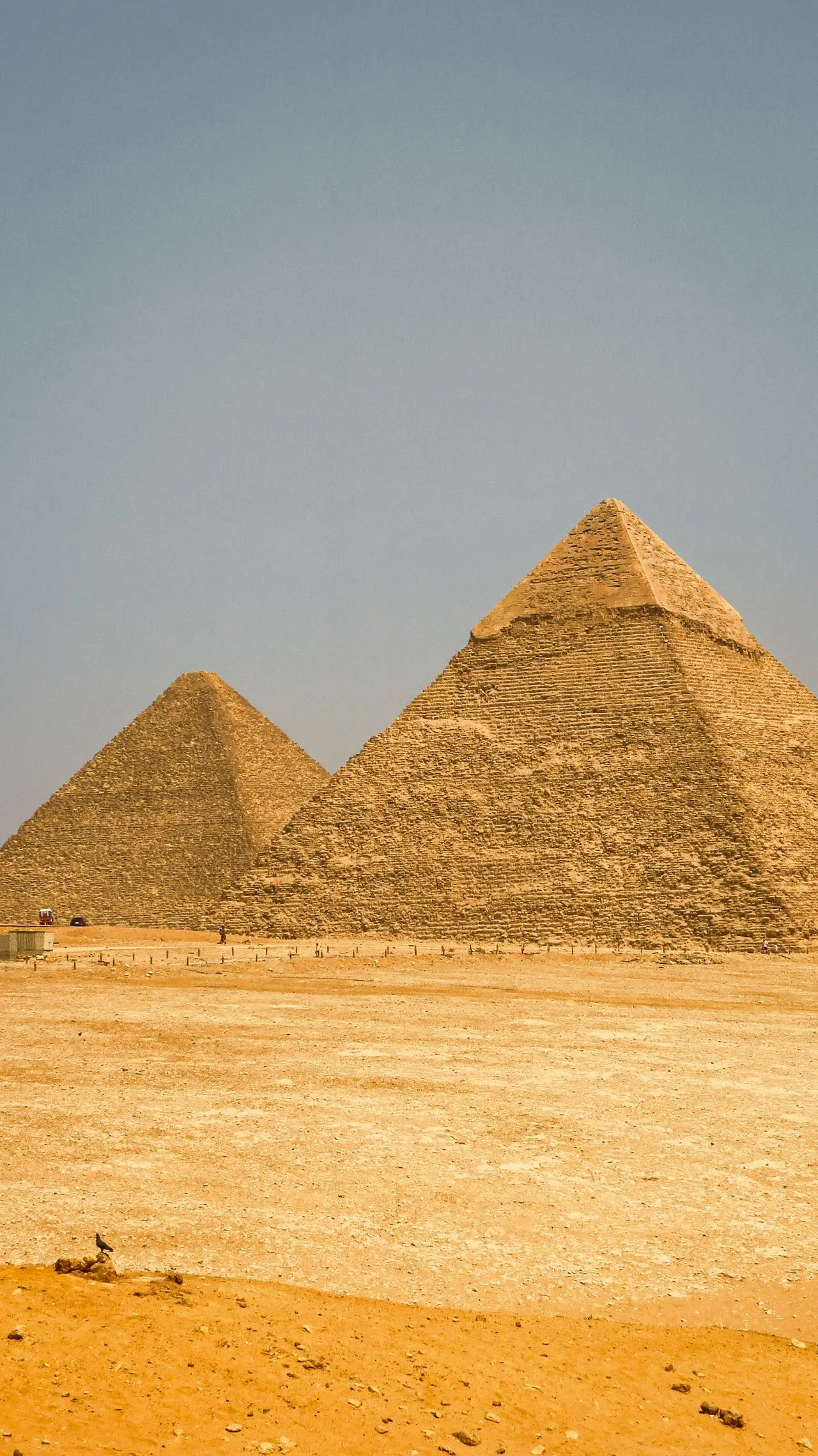
The Giza plateau is home to three main pyramids — the Great Pyramid of Khufu, the Pyramid of Khafre, and the Pyramid of Menkaure — along with the Great Sphinx, several smaller pyramids, and a handful of ancient temples and tombs. It’s a lot to take in, and most people spend the better part of a full day there.
Walking around the base of the Great Pyramid is an experience in itself. The sheer scale of it doesn’t hit you until you’re right there, neck craned back, doing the math in your head and failing. Each side of the pyramid stretches over 230 metres. It’s massive. It’s ancient. And it just sits there, radiating quiet permanence.
You can pay to enter the Great Pyramid and climb down into the King’s Chamber, where Khufu’s granite sarcophagus still rests. The passage is narrow and low-ceilinged, and it can feel a little claustrophobic, so that’s worth keeping in mind. But stepping into that chamber and seeing the sarcophagus up close is one of the most memorable moments the trip has to offer.
The Great Sphinx, just a short walk away, is another must-see. Up close, it’s far more weathered and worn than it appears in photographs, which somehow makes it even more impressive. The missing nose — one of history’s great mysteries — is immediately obvious, and the sheer age of the creature carved into the rock is palpable.
Camel Rides and the View from the Plateau
No trip to Giza is complete without a camel ride across the sand. It sounds touristy — and it is, a little — but it’s genuinely one of the highlights. Camel riders will take you up to a high point on the plateau where all three pyramids stretch out before you against the horizon. In the golden light of late afternoon or early evening, it’s the kind of view that people travel across the world to see.
Camels are a bit smelly and a bit grumpy, for the record. But they’re also surprisingly comfortable once you settle into the rhythm of it. Bargain on the price before you get on — more on that in a moment.
Practical Tips for Your Visit
A few things that will make your trip smoother and more enjoyable:
Arrive early. The pyramids get busy, especially around midday and on weekends. Morning visits are quieter, cooler, and honestly just more magical. If you can be there close to opening time, do it.
Bring plenty of water and sunscreen. Even in the cooler months, you’re spending hours in direct sunlight on exposed sand and stone. A wide-brimmed hat is a smart addition to your packing list.
Bargain, but be friendly about it. Taxi fares, camel rides, trinkets from vendors — prices are almost always negotiable. The opening number is rarely the real number. A warm smile and a bit of humour go a long way. It’s not a confrontation; it’s just how transactions work here.
Hire a local guide. This is one of the best investments you can make. A knowledgeable Egyptian guide will bring the history alive in a way that a guidebook simply can’t. They’ll point out details you’d never notice on your own — the precision of the engineering, the astronomical alignments, the layers of history buried beneath your feet. It transforms a sightseeing day into something genuinely educational and memorable.
Be respectful. This is a sacred and historically significant site, not just a photo backdrop. Don’t climb on structures where it’s not permitted. Don’t litter. Take a moment to appreciate what you’re actually looking at, rather than rushing through it.
Beyond the Pyramids: Cairo Is Worth Exploring
It would be a shame to fly all the way to Egypt and spend your entire trip on the Giza plateau. Cairo itself is a city that rewards curiosity and patience in equal measure.
The Egyptian Museum is an absolute must-visit — home to one of the world’s largest collections of ancient Egyptian artefacts, including treasures pulled from Tutankhamun’s tomb. The Islamic quarter (Khan el-Khalili bazaar) is a sensory overload in the best way: spices, textiles, jewellery, lanterns, and the kind of bustling energy that makes you feel like you’ve stepped into another century.
The food deserves special mention too. Koshari — a dish of rice, lentils, pasta, and spiced tomato sauce — is a Cairo staple and costs almost nothing. Fresh Egyptian bread, grilled meats, ahweh (strong Egyptian coffee) — eating your way through Cairo is one of the quiet pleasures of the trip.
Cairo is loud, chaotic, and not always easy to navigate. But it’s also vibrant, generous, and deeply fascinating. Give it time, and it gives back tenfold.
Is Egypt Safe for Travellers?
This is the question every prospective visitor asks, and the honest answer is: for the most part, yes — especially in the tourist areas like Cairo and Giza. Egypt has invested heavily in making its tourism infrastructure welcoming and secure, and millions of travellers visit every year without incident.
As with any destination, common sense goes a long way. Stay aware of your surroundings, keep your valuables secure, and check your government’s travel advisories before you book. Sticking to well-known routes and reputable tour operators is a sensible baseline.
Final Thoughts
Visiting the Pyramids of Egypt is one of those rare trips that stays with you long after you’ve come home. It’s not just about ticking off a bucket list item or grabbing impressive photos for social media — although both of those things will absolutely happen. It’s about standing in front of something ancient and extraordinary, and feeling, just for a moment, connected to a thread of human history that stretches back thousands of years.
Egypt asks a little patience from its visitors. The heat, the crowds, the beautiful chaos of Cairo — none of it is effortless. But if you lean into it, if you let the country do its thing, the reward is something genuinely rare: a trip that changes the way you see the world.
So if the Pyramids are on your list — go. Don’t wait for the perfect time or the perfect conditions. Just go.
You won’t regret it.